Do I Need an EICR for a 1 Month Property Rental

A one-month rental can still count as a proper tenancy. If it does, the electrical safety rules do not usually become lighter just because the stay is short.
In the UK, an EICR, or Electrical Installation Condition Report, checks the fixed electrical installation in a property. That means the consumer unit, wiring, sockets, switches, earthing and other fixed parts of the electrical system. It does not normally cover loose appliances such as kettles or toasters.
For most private residential rentals, the safe answer is simple: if you are renting out a property for one month as a residential let, you should have a valid EICR in place before the occupier moves in. The exact legal position depends on where the property is in the UK and what kind of rental arrangement it is, but the length of the let is rarely the key issue.
This article is general information for UK property rentals. It is not legal advice. If the arrangement is unusual, check the rules for your nation and get advice from a qualified letting agent, solicitor or local authority.
The short answer is usually yes
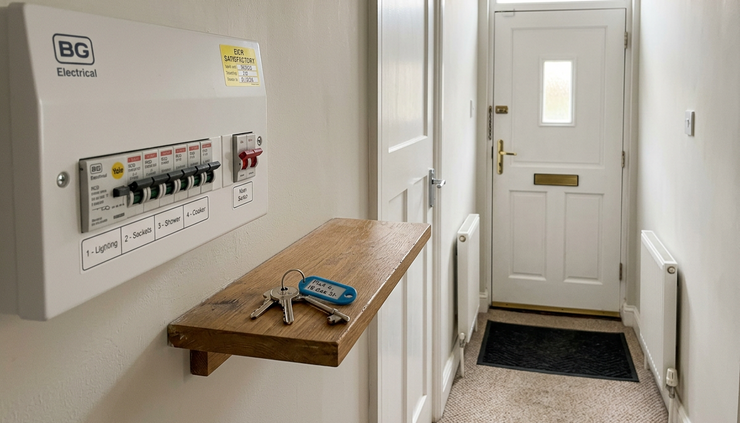
If you are asking, “Do I need an EICR for a 1 month property rental?”, the answer is usually yes if it is a private residential tenancy.
An EICR requirement is based on the type of property and rental arrangement, not simply on whether the tenant stays for one month, six months or a year.
A landlord cannot normally avoid electrical safety duties by offering a short fixed term. If the property is being occupied as someone’s home, even for a brief period, the landlord still has duties to make sure the electrical installation is safe.
In practical terms, that means:
The property should have a valid EICR.
The inspection should be carried out by a competent and qualified person.
Any required remedial work should be completed within the relevant timescale.
The occupier should receive a copy of the report when the rules require it.
If an EICR already exists and is still valid, you may not need a fresh inspection just because a new one-month tenancy starts. You need to check the report date, the recommended next inspection date and whether any major electrical work has happened since.
What an EICR actually proves
An EICR does not say a property is “perfect”. It gives a professional assessment of whether the fixed electrical installation is safe for continued use at the time of inspection.
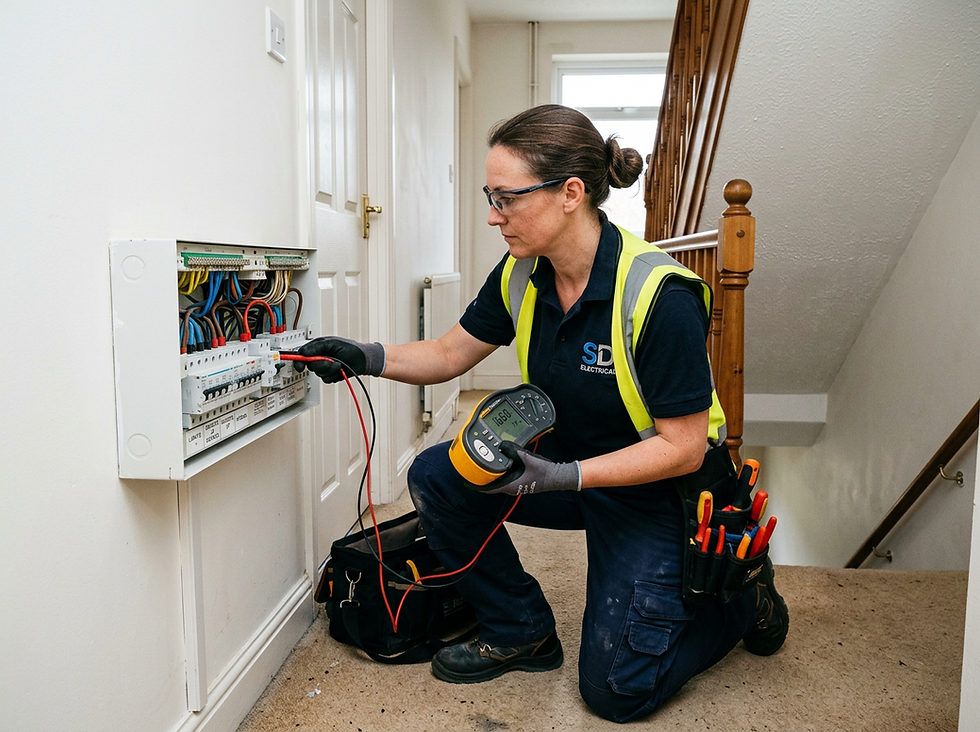
The electrician will inspect and test parts of the installation, then issue a report. The report may include codes such as:
Code | What it broadly means | What usually happens next |
C1 | Danger present | Urgent action is needed |
C2 | Potentially dangerous | Remedial work is needed |
FI | Further investigation required | More checking is needed |
C3 | Improvement recommended | Not usually a fail on its own |
A report with C1, C2 or FI observations is not something to ignore. For rental purposes, the landlord normally needs to deal with these issues and keep evidence that the work has been completed.
A clean or satisfactory EICR gives both sides more confidence. A tenant knows the fixed electrics have been checked. A landlord has evidence that they took electrical safety seriously before occupation.
The rules depend on where the property is
Electrical safety rules are not identical across England, Scotland, Wales and Northern Ireland. The broad direction is the same: rented homes must be electrically safe. The details differ.
England
In England, private landlords must have the electrical installation in rented homes inspected and tested at least every five years, unless the report says the next inspection should happen sooner.
Landlords must also provide the report to tenants in the required way. For new tenants, this generally means before they occupy the property.
That five-year period does not mean a landlord can ignore the report between inspections. If the EICR calls for remedial work, or if the electrics are altered or damaged, the landlord needs to act.
Scotland
Scotland has long had electrical safety duties for private rented housing. A private rented property generally needs an EICR, and inspections are normally repeated at least every five years.
Scottish requirements can also include checks linked to appliances provided by the landlord, so landlords should not assume the fixed wiring report is the only document they need.
Wales
In Wales, rented homes must meet fitness for human habitation requirements. Electrical safety inspection and testing form part of that wider duty for many rented homes, with reports required at set intervals.
A one-month occupation does not remove the need to provide a safe home. Landlords in Wales should check the Renting Homes rules that apply to their contract type.
Northern Ireland
Northern Ireland has different housing rules from Great Britain. There is still a general duty to provide safe accommodation, but the specific EICR framework is not the same as England, Scotland or Wales.
For any short residential let in Northern Ireland, landlords should check the current local requirements and take practical steps to show the electrics are safe.

A one-month let can still be a tenancy
The confusing part is that “one-month rental” can mean different things.
It might be:
A short assured shorthold tenancy in England.
A holiday let.
Temporary accommodation during building work.
A serviced apartment booking.
A lodger arrangement in the landlord’s own home.
A company let.
A licence to occupy rather than a tenancy.
The label on the agreement does not always decide the legal position. What matters is how the arrangement works in practice.
For example, if the occupier has exclusive possession of the whole flat, pays rent and lives there as their home for a fixed month, it may look like a residential tenancy even if the agreement is short.
By contrast, a genuine holiday let may fall under different rules, although the owner still has safety duties. Holiday accommodation should still have safe electrics, and many responsible operators arrange regular EICRs even where the exact legal requirement differs from standard private renting.
When you may not need a new EICR
You may not need a brand-new EICR for every one-month rental. The key question is whether there is already a valid report.
A landlord may be able to rely on an existing EICR if:
It was carried out by a competent person.
It is still within the validity period stated on the report.
It covers the whole rented property.
Required remedial works have been completed.
No major electrical changes have happened since the inspection.
There is no reason to suspect damage, deterioration or unsafe use.
For example, if a flat had a satisfactory EICR last year and the report says the next inspection is due in five years, a new one-month tenancy this month would not automatically require a new inspection.
Still, the landlord should provide the report as required and keep records. A short let often moves quickly, so it helps to prepare this before advertising the property.
When a fresh EICR is sensible
Even if a report has not technically expired, a fresh inspection may be wise in some cases.
Consider arranging a new EICR if:
The previous report is missing or incomplete.
The report recommended an earlier reinspection date.
Electrical work has been carried out since the report.
There has been water damage, fire damage or pest damage.
The property has been empty for a long time.
The consumer unit, sockets or wiring look old or damaged.
The incoming occupier will use the property in a higher-demand way, such as working with several appliances or heaters.
A one-month rental often gives landlords very little time to fix problems once the occupier is in. Finding issues before move-in is cheaper and safer than dealing with an electrical fault during the stay.
What landlords should do before a one-month rental
A short rental benefits from a simple pre-let process. It does not need to be complicated, but it should be documented.
Check the report date
Look at the EICR and find the inspection date and the next inspection date. Do not assume the report lasts for five years in every case. The electrician may recommend a shorter interval.
Read the observation codes
Do not just look for the word “satisfactory”. Read the observations. If the report lists C1, C2 or FI items, make sure they have been dealt with and that you have written confirmation.
Give the occupier the right documents
If the rules require the tenant to receive the report, send it before they move in. Keep proof that you sent it, such as an email record.
Keep remedial evidence
If remedial electrical work was completed after the EICR, keep invoices, certificates and written confirmation from the electrician. The EICR and remedial paperwork should tell a clear story.
Do a basic visual check
Before the occupier arrives, walk through the property and look for obvious issues:
Cracked sockets.
Burn marks.
Loose switches.
Exposed cables.
Broken light fittings.
Overloaded extension leads left in place.
A visual check does not replace an EICR, but it can catch problems that happened after the inspection.

What tenants should ask before moving in
Tenants can also protect themselves by asking for the report before they pay final rent or collect keys.
A reasonable message might be:
Please can you send me the current EICR for the property and confirmation that any required remedial work has been completed before the start of the rental?
If the landlord or agent cannot provide it, ask why. There may be a simple explanation, but a missing report is a warning sign in a standard private rental.
When viewing or moving in, tenants should also look for visible electrical concerns. Report anything unsafe in writing as soon as possible. Do not open the consumer unit, remove fittings or try to repair wiring yourself.
Serviced accommodation and holiday lets need care too
A one-month rental may be marketed as a holiday let or serviced accommodation rather than a tenancy. This can change the legal paperwork, but it does not make electrical safety optional.
Owners and operators still have a duty to provide safe accommodation. Insurers, mortgage lenders, booking platforms or local licensing schemes may also expect evidence that the electrics are safe.
For serviced accommodation, turnover can be high. Guests may plug in chargers, laptops, hairdryers, heaters and cooking equipment. That repeated use can reveal weak points in sockets, circuits and appliances.
Even where an EICR is not required under the exact same rules as a standard tenancy, having one is often the most straightforward way to show that the fixed installation has been checked properly.
Do not confuse an EICR with other safety checks
An EICR is only one part of property safety. It does not replace other checks.
Depending on the property and location, a landlord may also need:
Gas safety checks.
Smoke alarms and carbon monoxide alarms.
Portable appliance testing for supplied appliances, where appropriate.
Fire risk assessment duties for certain buildings.
Legionella risk control.
Energy performance documents.
Deposit protection and prescribed information.
Electrical safety also covers more than one document. A landlord who supplies electrical appliances should make sure they are safe, even though appliances are not normally covered by the fixed wiring EICR.
What happens if there is no EICR
Failing to have the right electrical safety report can cause several problems.
For landlords, it may lead to enforcement action, penalties and difficulty defending a complaint if something goes wrong. It may also cause issues with insurance, especially if an electrical fault leads to damage or injury.
For tenants, the risk is more direct. Unsafe wiring can cause electric shock, burns or fire. Many electrical faults are hidden behind fittings or inside a consumer unit, which is why a professional inspection matters.
A one-month stay may feel too short for paperwork, but electrical faults do not wait for a tenancy to become long-term.
The practical rule to follow
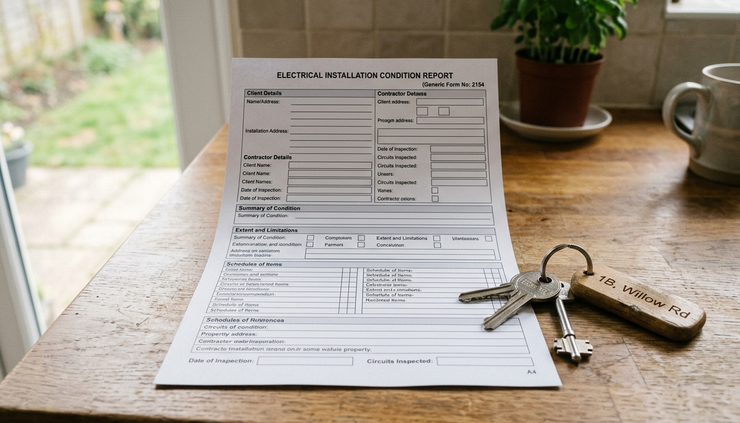
If you are renting out a residential property for one month, treat it as though an EICR is required unless you have a clear reason why it is not.
That means:
Check whether the rental is a private residential tenancy.
Find the current EICR and confirm it is still valid.
Complete any required remedial work before occupation where required.
Give the occupier a copy of the report if the rules require it.
Keep all records in one place.
If you are a tenant, ask for the report before move-in. If you are a landlord, arrange the inspection before marketing or agreeing dates, especially for short lets with a fast turnaround.
The safest answer to a one-month rental is not to treat it as an exemption. Treat it as a short occupation of a home that still needs safe wiring, clear records and a valid electrical safety report.