Is My Insurance Invalid If I Dont Have a Satisfactory EICR

A missing or unsatisfactory EICR can feel like a small paperwork problem, until something goes wrong and an insurer asks for evidence. The short answer is: your insurance is not automatically invalid just because you do not have a satisfactory EICR, but it can put you in a difficult position.
The real answer depends on three things:
What your insurance policy says
Whether the property must legally have an EICR
Whether an electrical fault is connected to the claim
If you are a landlord, letting agent, homeowner, or property manager, it is worth understanding the difference between “not ideal” and “policy-breaching”. An EICR is not just a certificate to file away. It is a written record of the condition of the electrical installation, and insurers may ask for it when assessing risk or investigating a claim.
What an EICR actually proves
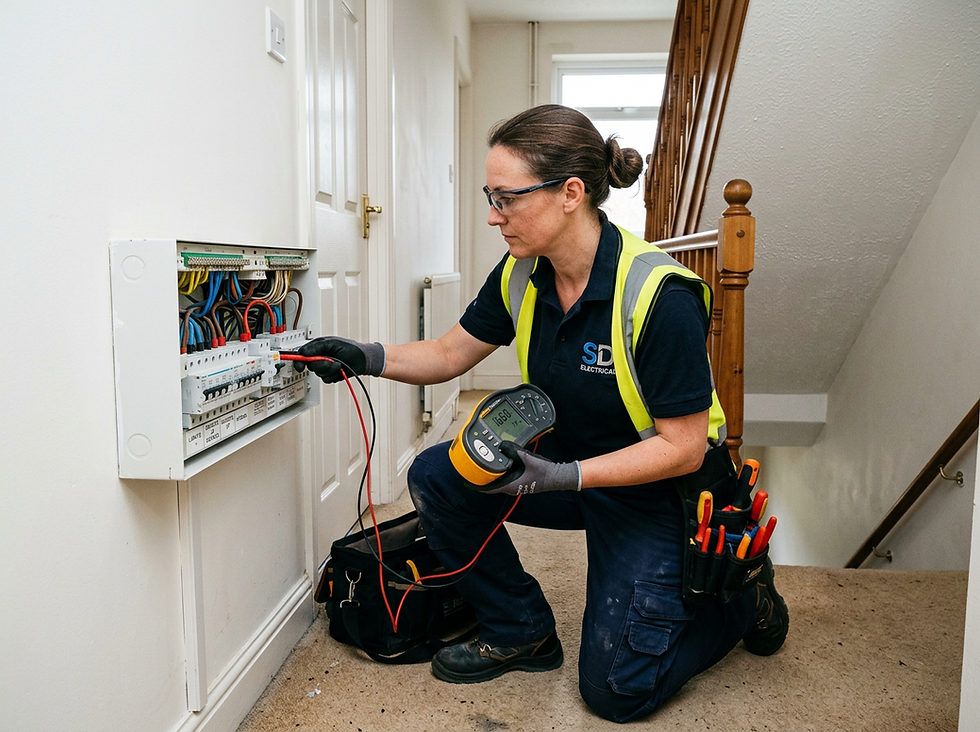
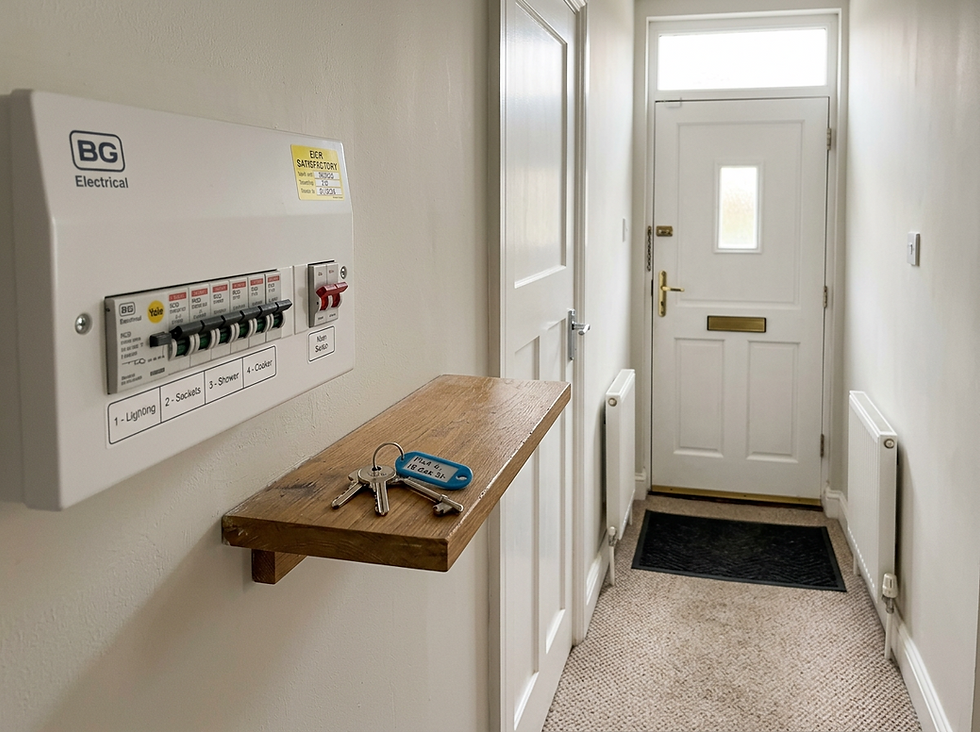
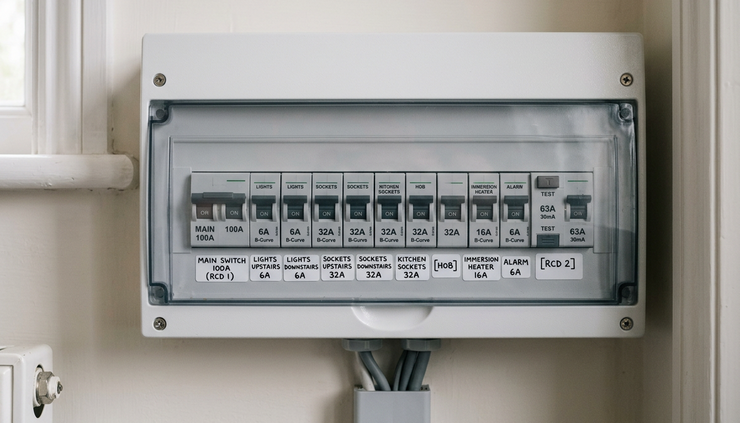
An Electrical Installation Condition Report, or EICR, checks the safety and condition of the fixed electrical installation in a property. That includes wiring, circuits, sockets, switches, earthing, bonding, and the consumer unit.
It does not usually cover portable appliances such as kettles, fridges, washing machines, lamps, or TVs. Those fall under separate checks, such as PAT testing, where relevant.
After the inspection, the electrician issues a report. The report will usually say whether the installation is satisfactory or unsatisfactory.
A satisfactory report means the installation is safe for continued use at the time of inspection. An unsatisfactory report means the electrician found issues that need attention.
The common EICR codes are:
Code | What it usually means | Effect on the report |
C1 | Danger present | Unsatisfactory |
C2 | Potentially dangerous | Unsatisfactory |
FI | Further investigation needed | Unsatisfactory |
C3 | Improvement recommended | Usually still satisfactory |
A C3 does not normally fail the report on its own. It means the electrician recommends an improvement, but the issue is not classed as dangerous or potentially dangerous at the time of inspection.
By contrast, C1, C2, or FI codes need action. If the report is unsatisfactory, you should arrange remedial work or further investigation and keep proof that it has been completed.
Does not having a satisfactory EICR make insurance invalid?
In most cases, not automatically.
Insurance policies do not usually become void the moment an EICR expires, fails, or has not been arranged. Insurers look at the policy wording, the circumstances of the claim, and whether the policyholder met their duties.
That said, an insurer may have grounds to challenge or reduce a claim if:
The policy specifically required a valid or satisfactory EICR
You told the insurer you had one when you did not
You failed to comply with legal duties as a landlord
You ignored known electrical defects
The claim involved an electrical fire, shock, or wiring fault
Lack of maintenance contributed to the damage
This is where the wording matters. Some policies include general conditions about keeping the property in a good state of repair. Others include more specific electrical inspection requirements, especially for rented property, HMOs, commercial premises, serviced accommodation, or unoccupied buildings.
A missing EICR is rarely the whole story. The bigger issue is whether you breached a policy condition or ignored a known electrical risk.
If you are asking, “Is my insurance invalid if I dont have a satisfactory EICR?”, the safest practical answer is to check your policy schedule and conditions, then speak to your insurer or broker. Ask directly whether they require a current satisfactory EICR for your type of property and use.
This article is for general information only. It is not legal or insurance advice. Your policy wording and circumstances decide the outcome.
Why insurers care about EICRs
Insurers price risk. Electrical installations are a major part of that risk because faults can lead to fire, injury, power loss, damaged equipment, and expensive repairs.
An EICR gives an insurer evidence that a competent person has inspected the fixed wiring. It does not guarantee that nothing will ever go wrong, but it helps show that you took reasonable care.
This matters most when a claim is linked to electricity. For example:
A fire starts near the consumer unit
A tenant reports repeated electric shocks from a socket
Wiring overheats in a loft or cupboard
An old circuit fails and damages appliances
Water ingress affects electrical fittings
Temporary or DIY wiring causes damage
If there is no current satisfactory EICR, the insurer may ask more questions. They may appoint a loss adjuster or investigator. They may also ask for maintenance records, invoices, previous inspection reports, tenant complaints, photos, and proof of remedial work.
A claim for storm damage to a roof may have little to do with an EICR. A claim for an electrical fire is much more likely to turn on electrical safety evidence.

The difference between an expired EICR and an unsatisfactory EICR
An expired EICR and an unsatisfactory EICR create different risks.
An expired EICR means you may not have recent proof of the installation’s condition. The electrics might be safe, but you do not have current evidence.
An unsatisfactory EICR means a competent person has already found issues that need attention. This is more serious because you are now on notice. If an electrical incident happens after that, and you did not act, an insurer may take a much harder view.
For landlords, this can be especially important. If tenants continue living in a property after an unsatisfactory report and no remedial work is carried out, the issue is no longer hidden or unknown. There is a written report showing defects.
A sensible timeline looks like this:
Arrange the EICR before the previous one expires.
Review the codes as soon as the report arrives.
Ask the electrician to explain any C1, C2, or FI items.
Book remedial work promptly.
Get written confirmation when the work is complete.
Send evidence to the tenant or relevant person where required.
Keep all reports and invoices together.
If urgent danger is found, the electrician may make the installation safe immediately or advise that part of it must not be used. Take that seriously. Insurance issues matter, but safety comes first.
Legal duties for landlords in the UK
Electrical safety rules vary across the UK, and rented property has stricter duties than owner-occupied homes.
In England, private landlords must have electrical installations inspected and tested at least every five years by a qualified person. The report must be supplied to tenants and, if requested, to the local authority. If the report requires remedial work or further investigation, landlords must arrange it within the required timescale, commonly 28 days unless the report states a shorter period.
Scotland, Wales, and Northern Ireland have their own rules and housing standards. HMOs can also have additional requirements. If the property is let, used as serviced accommodation, occupied by multiple households, or subject to licensing, the rules may be more demanding.
For homeowners who live in their own property, there is usually no general legal duty to hold an EICR. Even so, an insurer may still expect the property to be maintained safely. Older homes, recent renovations, DIY alterations, and frequent electrical problems are good reasons to arrange an inspection.
The key point is simple: legal compliance and insurance cover are separate, but they often overlap. Breaking a legal duty does not automatically mean a claim fails, but it can make the insurer’s position stronger if the breach is relevant to the loss.

What an insurer may ask for after a claim
After a claim, the insurer may ask for documents that show how the property was maintained. This is normal, especially if the loss is large or the cause is unclear.
They may ask for:
The latest EICR
Previous EICRs
Electrical repair invoices
Certificates for remedial work
Details of the electrician or contractor
Photos of the consumer unit or damaged area
Tenant reports or complaint records
Maintenance logs
Evidence of compliance with landlord duties
If you have a satisfactory EICR and clear repair records, you can respond with confidence. If you do not, the process can become slower and more stressful.
That does not mean the insurer will refuse the claim. They still need to consider the policy wording and the facts. For example, if a pipe bursts and damages carpets, the lack of an EICR may not be relevant. If a fire starts because of defective wiring that was flagged months earlier, it may be highly relevant.
What to do if your EICR is unsatisfactory
An unsatisfactory EICR is not the end of the world. It is a call to act.
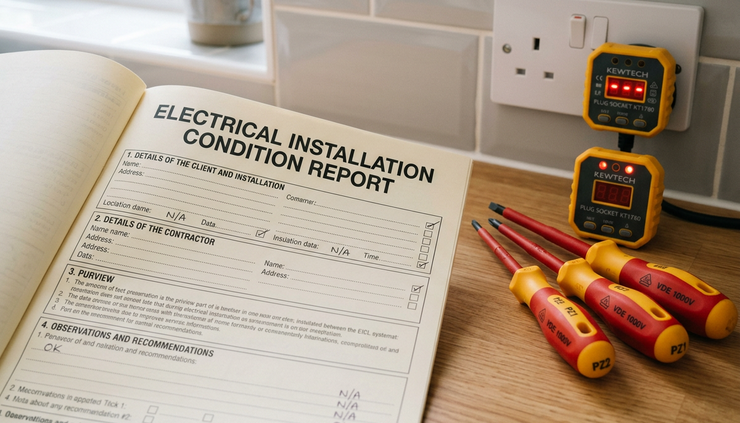
Start by reading the observations section of the report. Look at the codes, not just the final outcome. Some issues may be simple to fix. Others may need further investigation or more extensive work.
Take these steps:
Contact the electrician
Ask what needs urgent attention and what can be planned.
Book remedial work
Deal with C1, C2, and FI items promptly.
Get written proof
Keep invoices, minor works certificates, installation certificates, and written confirmation that the defects have been resolved.
Ask for confirmation of safety
Depending on the work, you may receive a new satisfactory EICR or supporting certification showing the required items were corrected.
Tell the right people
Landlords may need to give copies or written confirmation to tenants, agents, local authorities, or insurers.
Update your insurer if required
If your policy asks you to disclose material changes or safety defects, contact your insurer or broker. Keep a record of the conversation.
Do not hide the issue. If you later make a claim and the insurer discovers an unsatisfactory report that you ignored, that will be much harder to explain.
How to check your insurance policy
Insurance policies can be dense, but the relevant parts are usually in a few places.
Look for sections called:
General conditions
Policy conditions
Property owner’s duties
Landlord obligations
Fire safety conditions
Electrical installation requirements
Unoccupancy conditions
Endorsements
Assumptions or statements of fact
Pay close attention to wording such as:
“You must maintain the property in a good state of repair”
“You must comply with statutory obligations”
“Electrical installations must be inspected”
“A valid electrical safety certificate must be held”
“Failure to comply may affect cover”
“We will not pay for loss arising from...”
Also check the statement of fact or proposal summary. If it says you confirmed that the property has current electrical safety certification, but that is not true, speak to your broker or insurer as soon as possible.
Do not rely only on a renewal email or price comparison summary. The full policy wording matters.
When to contact your insurer or broker
Contact your insurer or broker if any of these apply:
Your policy specifically mentions electrical inspections
Your EICR is unsatisfactory
You cannot complete remedial work within the stated timescale
The property is rented, unoccupied, or used for short lets
There has been an electrical incident
You are unsure whether your cover depends on certification
Keep the message short and factual. You can say that an inspection has been completed, certain remedial works are required, and you have booked a qualified electrician. Ask whether they need copies or any further information.
If you speak by phone, make a note of the date, time, person you spoke to, and what they said. If possible, ask for confirmation by email.
This protects you if there is later confusion about what was disclosed.
The practical answer
A lack of a satisfactory EICR does not always make insurance invalid. Many claims will still be considered on their facts. But the absence of a current satisfactory report can weaken your position, especially where electrical safety is relevant.
For landlords, the risk is higher because electrical safety duties are clearer and easier for insurers to check. An unsatisfactory report that has not been acted on is the biggest concern.
The best next step is simple: find your latest EICR, check the result, read your insurance conditions, and arrange any remedial work without delay. Keep the paperwork. If your policy requires disclosure, tell your insurer or broker.
That way, you are not relying on hope if something goes wrong. You have evidence that the property was inspected, defects were handled, and you took electrical safety seriously.