Do You Need an EICR If You Rent Out a Room in Your House

Renting out a spare room can feel simple. You live in the property, someone pays for the room, and you share the kitchen or bathroom. Then the paperwork questions start, and one of the biggest is electrical safety.
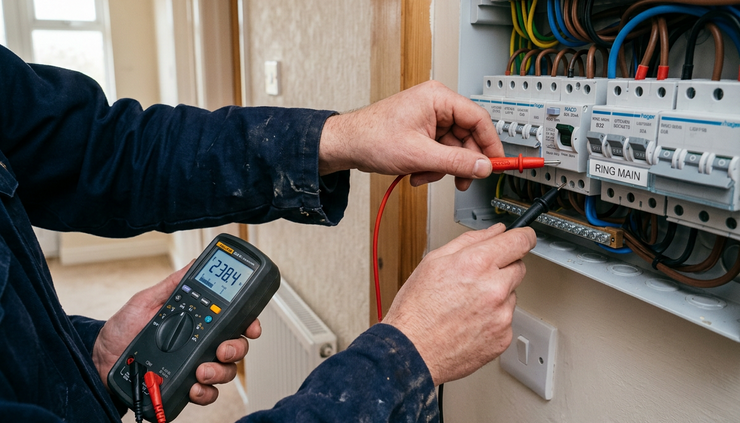
An EICR, or Electrical Installation Condition Report, checks the fixed electrical installation in a property. That means wiring, sockets, light fittings, the consumer unit, earthing and related safety measures.
So, do you need one if you rent a room in your own home?
The short answer is: if you are a live-in landlord renting to a lodger in England, you are generally not required under the private rented sector EICR rules to have an EICR. But there are several important exceptions, and getting one can still be a sensible step.
This article gives general information for UK householders. It is not legal advice. If your setup is unusual, or you are unsure whether your occupier is a lodger or tenant, check with your local council or a qualified housing adviser.

The short answer depends on whether the person is a lodger or a tenant
The key question is not simply whether money changes hands. The key question is what legal arrangement you have created.
If you rent a room in the home you also live in, the person is often classed as a lodger. In that case, they usually have a licence to occupy rather than a tenancy. They share facilities with you, such as the kitchen, bathroom or living room, and you remain resident in the property.
In England, the Electrical Safety Standards in the Private Rented Sector Regulations mainly apply to private rented tenancies. They generally do not cover the classic live-in landlord and lodger setup.
That said, you may need an EICR if the arrangement is closer to a tenancy, or if other rules apply.
Here is a simple way to look at it:
Situation | Is an EICR usually legally required? | Why it matters |
You live in the home and rent one room to a lodger | Usually no in England | Live-in landlord arrangements are commonly treated differently from private tenancies |
You move out and rent rooms to people | Usually yes | You are no longer sharing the home as a resident landlord |
You rent a self-contained part of your home | Often yes | A separate flat or annexe may be treated as a tenancy |
You have several unrelated people renting rooms | Possibly yes | HMO rules may apply |
Your mortgage, insurer or local council asks for one | Yes in practice | Contract or licensing conditions can require it |
The safest way to phrase the answer is this: you may not have a legal duty to get an EICR for a single lodger in your own home, but you still have a duty to provide safe accommodation.
Why your exact living arrangement matters
Small details can change the legal position. A spare room with shared facilities is different from a converted basement flat with its own entrance, kitchen and bathroom.
A lodger usually:
Lives in the same property as the landlord
Shares facilities such as the kitchen or bathroom
Does not have full exclusive possession of a separate dwelling
Occupies under a licence agreement
Is part of the landlord’s household in practical terms
A tenant usually:
Has exclusive possession of the space
May have stronger rights to keep the landlord out
Often occupies under an assured shorthold tenancy in England
May live in a property where the landlord does not also live
Has clearer statutory protection under private rented sector rules
The wording on your agreement matters, but the real-life setup matters too. Calling someone a lodger does not automatically make them one if the facts point the other way.
For example, if you convert the top floor into a separate flat, give the occupier exclusive use of the space, and you do not enter it except by arrangement, that may look much more like a tenancy. In that case, electrical safety duties are likely to be stricter.
How the rules differ across the UK
Electrical safety law is not identical across England, Wales, Scotland and Northern Ireland. If you are asking, “Do you need an EICR if you rent out a room in your house?”, the answer can change depending on where the property is.
England
For most private rented properties in England, landlords must make sure the electrical installation is inspected and tested by a qualified person at least every five years. They must also provide the report to tenants and carry out required remedial work.
For a typical live-in landlord with a lodger, these regulations generally do not apply in the same way. Still, electrical equipment and installations should be safe. If someone is injured because the electrics were unsafe, “the regulations did not require an EICR” may not be much comfort.
Wales
Wales has its own renting rules under the Renting Homes framework. Electrical safety checks are a key part of making many rented homes fit for human habitation.
Live-in lodging arrangements can be treated differently from standard occupation contracts, so it is worth checking the exact position if you rent a room in your main home in Wales. If there is any doubt, ask the local council or Rent Smart Wales for guidance.
Scotland
Scotland has strict electrical safety duties for private rented housing, including periodic inspection of electrical installations. The position for resident landlords and lodgers can differ from standard private tenancies.
If the arrangement has features of a private residential tenancy, or the property is an HMO, expect stronger requirements.
Northern Ireland
Northern Ireland has its own private rented sector rules. The exact EICR duties and related safety obligations can differ from Great Britain.
If you are renting rooms in Northern Ireland, check current local rules before relying on guidance written for England.
When HMO rules can change everything
A common mistake is assuming that “it is just my house” means HMO rules cannot apply.
An HMO, or house in multiple occupation, usually involves people from more than one household sharing facilities. In England, a property with three or more people forming two or more households can fall within the HMO definition. Larger HMOs, and some smaller ones in certain council areas, can need a licence.
If you live in the property and take in one lodger, HMO rules are unlikely to be the main concern. If you take in two, three or more lodgers, the picture may change.
HMO rules can affect:
Fire safety measures
Room sizes
Kitchen and bathroom facilities
Management duties
Electrical safety evidence
Local licensing conditions
Some councils also run additional licensing schemes. These can apply to smaller HMOs that are not covered by mandatory licensing.
If your home may be an HMO, speak to the council before taking in extra occupiers. Do this early, not after everyone has moved in.
What an EICR actually checks
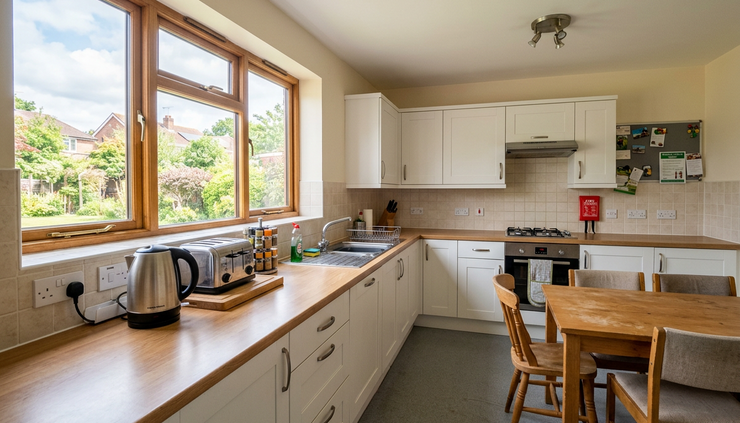
An EICR looks at the fixed electrical installation. It is not the same as a quick visual check, and it is not the same as testing portable appliances.
An electrician carrying out an EICR will usually look at things such as:
The consumer unit
Protective devices such as RCDs
Earthing and bonding
Socket circuits
Lighting circuits
Signs of overheating or damage
Defects in older wiring
Whether the installation is safe for continued use
The report will give inspection results and may include classification codes.
The most serious issues are usually marked as:
C1
Danger present. There is a risk of injury and immediate action is needed.
C2
Potentially dangerous. Urgent remedial work is needed.
FI
Further investigation required. The electrician has found something that needs more checking.
A satisfactory report means the installation is safe for continued use at the time of inspection. It does not mean nothing can ever go wrong later.
An EICR also does not usually cover portable appliances, such as:
Kettles
Toasters
Microwaves
Lamps
Extension leads
Phone chargers supplied by the occupier
If you provide appliances for a lodger, you should make sure they are safe. Many landlords choose portable appliance testing, often called PAT testing, although the legal requirements depend on the situation.
Why getting an EICR can still be a good idea
Even if you are not legally required to get an EICR for a single lodger, there are good reasons to arrange one.
A lodger will use the electrics differently from a guest. They may plug in chargers, heaters, computers, hair dryers, lamps and cooking appliances. They may spend long periods in the room. If the electrical installation is old, overloaded or poorly altered, the risk rises.
An EICR can give you:
A clear record of the condition of the electrics
Early warning of faults
Evidence that you took safety seriously
Guidance on upgrades, such as RCD protection
Peace of mind before someone moves in
It may also help with insurance. Some home insurance policies may ask about lodgers, paying guests or rental use. If your insurer wants proof that the property is safe, an EICR can be useful evidence.
Your mortgage terms may also require consent before renting a room. The Rent a Room Scheme may deal with tax treatment in some cases, but it does not remove safety duties or override mortgage and insurance conditions.
What to do before renting out the room
Before someone moves in, take a practical approach. You do not need to turn your home into a commercial rental block, but you should treat safety seriously.
Check whether they will be a lodger
Write down the real arrangement. Will you live there as your only or main home? Will you share the kitchen or bathroom? Will the room be part of your household, or a separate unit?
If the arrangement is unclear, get advice before advertising the room.
Ask your insurer and mortgage lender
Tell your home insurer that you plan to rent a room. Do not assume it is covered. Ask whether they need any electrical safety evidence.
If you have a mortgage, check whether you need consent. Some lenders are comfortable with one lodger, while others have conditions.
Consider getting an EICR anyway
For many homeowners, the simplest route is to book an EICR before the lodger moves in. It gives you a baseline, especially if the property is older or you have never had the electrics inspected.
Use a competent electrician. Ask for their qualifications, experience and insurance. For rented property work, choose someone familiar with EICR reporting and current UK wiring standards.
Fix obvious hazards
Walk through the room and shared spaces. Look for cracked sockets, loose switches, scorch marks, flickering lights, damaged cables and overloaded extension leads.
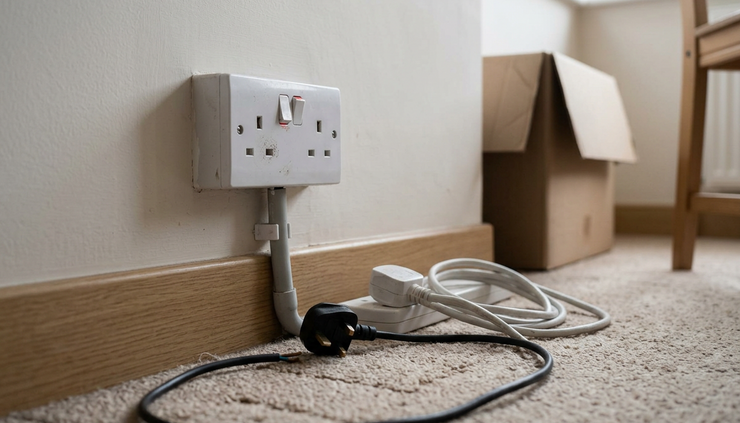
Do not rely on extension leads as a permanent fix for too few sockets. If the room needs more outlets, ask an electrician about installing them properly.
Keep records
Keep copies of:
The lodger agreement
Any EICR
Electrical repair invoices
Appliance manuals or test records
Insurance correspondence
Council advice, if relevant
Good records help if there is a dispute, insurance claim or council query later.
A sensible rule of thumb
If you rent one spare room in the home you live in, and the person is genuinely a lodger, an EICR is usually not a strict legal requirement in England under the main private rented sector electrical safety rules.
But there are three times when you should treat an EICR as essential:
You do not live in the property
The occupier has something closer to a tenancy
The property may be an HMO or subject to licensing
Even outside those cases, arranging an EICR is often the most sensible choice. It is a clear, practical way to check that the home is safe before someone pays to live there.
Renting a room is still sharing a home. The best approach is simple: confirm the legal setup, check your insurance and mortgage position, speak to the council if HMO rules might apply, and make sure the electrics are safe before the lodger moves in.