Does Installing a Socket Affect Your Existing EICR Report

Adding a socket sounds like a small job. In electrical terms, it can still change the condition of the installation, the paperwork you hold, and what an inspector can say next time the property is checked.
The short answer is this: installing a socket does not usually cancel or invalidate an existing EICR by itself, because an Electrical Installation Condition Report is a record of the installation at the time it was inspected. But the new socket will not be covered by that report unless it was already in place when the inspection happened.
That small distinction matters. If the socket is installed correctly and certified, your EICR can sit alongside the new certificate. If the socket is installed badly, it could create safety issues and may affect the outcome of a future EICR.

An EICR is a snapshot, not a live certificate
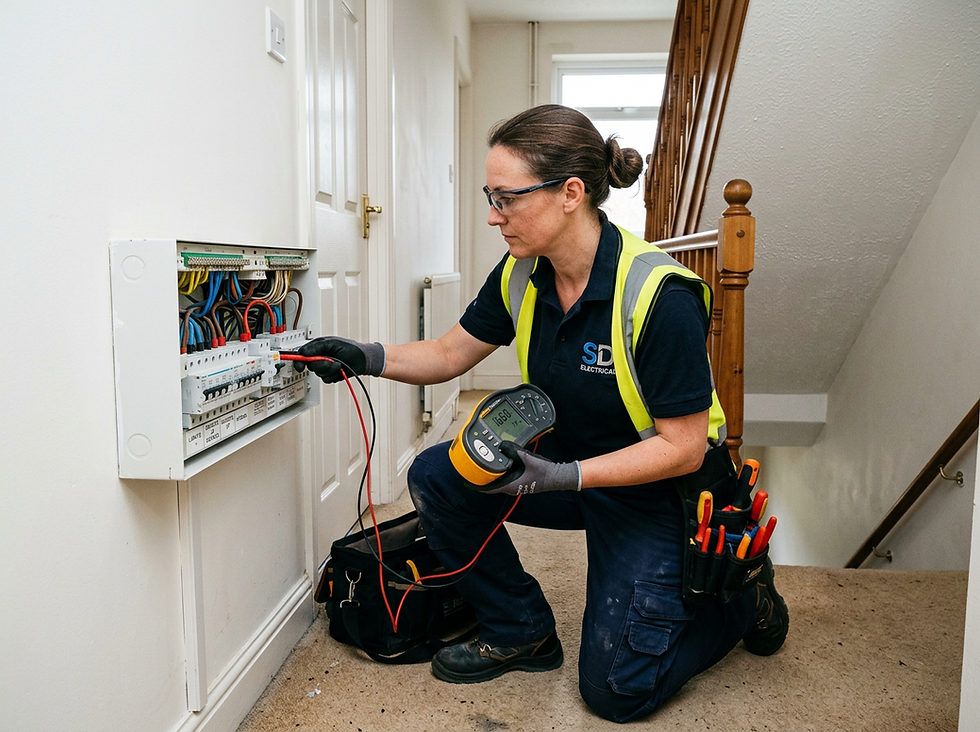
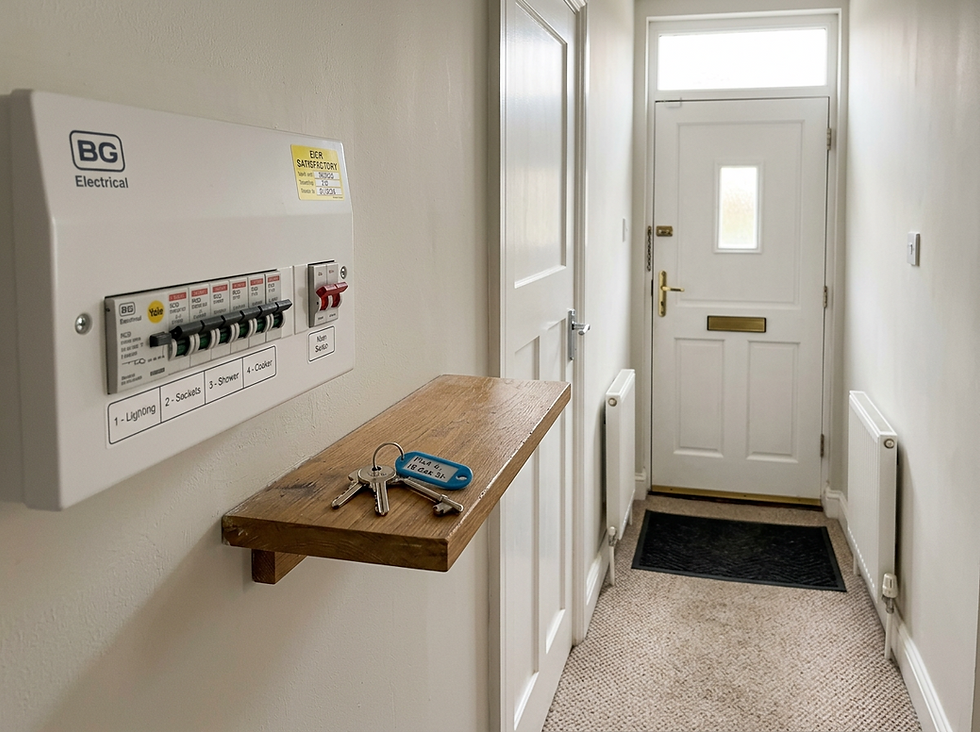
An EICR checks the condition of an electrical installation at a specific point in time. It looks at whether the installation is safe for continued use, based on visible inspection and electrical testing.
It is not a guarantee that the installation will remain safe after changes are made. It also does not automatically include work carried out after the inspection date.
Think of it like an MOT for a car. If the car passes on Monday and someone changes the brakes badly on Friday, the MOT does not describe the car’s new condition. The old document still shows what was found on Monday, but it no longer tells the whole story.
The same principle applies with electrical work.
If your EICR was completed before the socket was added, the report still records the installation as it was then. The new socket sits outside the scope of that report. That does not mean the EICR becomes useless, but it does mean you need the right paperwork for the new work.
What paperwork should you get after installing a socket?
The paperwork depends on the type of socket installation.
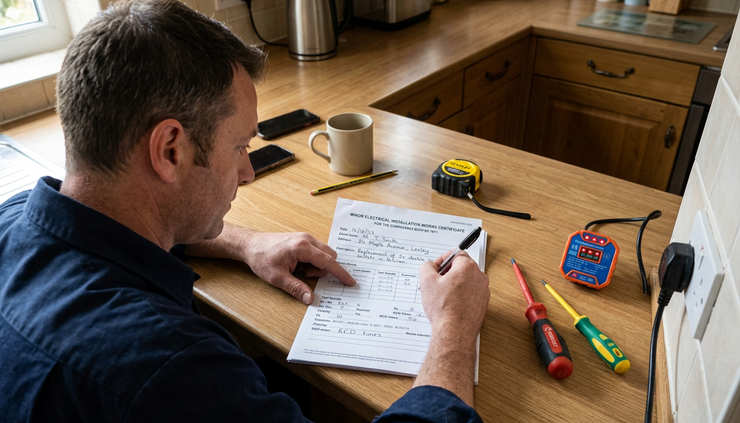
For many simple socket additions, such as adding an extra point to an existing circuit, the electrician should provide a Minor Electrical Installation Works Certificate. This confirms the work was designed, installed, inspected, and tested properly.
For larger work, such as installing a new circuit from the consumer unit, the electrician should provide an Electrical Installation Certificate instead.
These certificates are different from an EICR.
Document | What it covers | When it is usually issued |
EICR | The condition of an existing electrical installation | During periodic inspection and testing |
Minor Electrical Installation Works Certificate | A small alteration or addition to an existing circuit | After adding a socket to an existing circuit |
Electrical Installation Certificate | New circuits, major alterations, or more involved electrical work | After installing a new circuit or significant electrical work |
The key point is simple: the new certificate fills the gap left by the existing EICR. Together, the documents show both the condition of the installation at the time of the EICR and the details of the later socket work.
If a tenant, buyer, letting agent, insurer, or future electrician asks what changed after the EICR, the certificate gives a clear answer.
When a new socket can affect your EICR status
A new socket can affect your position if it changes the safety or compliance of the installation.
A correctly installed socket, tested and certified by a competent electrician, should not cause a problem. A poorly installed socket can.
Common issues include:
No effective earthing
Incorrect polarity
Loose connections
Overloaded circuits
Damage to existing cables
Lack of RCD protection where required
Unsafe cable routes
Poor work in kitchens, bathrooms, outdoors, or other higher-risk areas
Accessories fitted too close to water or heat sources
Spurs added incorrectly from ring final circuits
If any of these issues are found during a later inspection, they may appear on the next EICR as a coded observation.
EICR observations are commonly coded as:
C1
Danger present. Immediate action is needed.
C2
Potentially dangerous. Urgent remedial work is needed.
C3
Improvement recommended. The installation may still be satisfactory, but better practice is advised.
FI
Further investigation required.
A badly added socket could lead to a C1, C2, or FI depending on the fault. In that case, the issue is not that you installed a socket. The issue is that the work made the installation unsafe or unclear.

The existing EICR does not automatically cover the new socket
This is the part that often causes confusion.
If you install a socket after an EICR, the old report does not suddenly become false. But it also does not certify the added socket.
For example, say a property had an EICR in March. The report was satisfactory. In June, an electrician added two sockets in the lounge. The March EICR remains a record of the installation in March. The June socket work should have its own certificate.
That means the paperwork trail may look like this:
March
EICR completed and marked satisfactory
June
Two sockets added to existing circuit
June
Minor Electrical Installation Works Certificate issued
Together, those documents make sense.
If the sockets are added with no certificate, the situation becomes less clear. The EICR cannot prove the later work was safe. A future inspector may need to test and inspect the addition, and if there are concerns, they may record them on the report.
What landlords need to know
Landlords in England must have electrical installations in rented homes inspected and tested at required intervals, with a valid EICR provided where needed under the rental rules. Similar duties apply across the UK, though the exact regulations differ by nation.
If a landlord adds a socket after an EICR, the safest approach is to keep:
The existing EICR
The certificate for the new socket work
Any Building Regulations compliance certificate if the work is notifiable
Records of any remedial work linked to the installation
For rental properties, the main issue is evidence. If a tenant, agent, council, or inspector asks about electrical safety, a landlord needs to show that electrical work has been done properly.
A new socket installed by a competent person and backed by the correct certificate should not normally require a brand-new EICR straight away. But if the alteration is extensive, if the existing installation is old, or if the electrician finds safety concerns, a further inspection may be sensible.
Does the work need to be notifiable under Building Regulations?
In England and Wales, some electrical work in dwellings is controlled under Part P of the Building Regulations. Not every socket addition is notifiable.
A straightforward extra socket added to an existing circuit in a typical room is often non-notifiable, provided it is not in a special location and does not involve a new circuit. Work can become notifiable where it includes a new circuit, replacement consumer unit, or certain work in higher-risk areas.
Special care is needed in places such as:
Bathrooms and shower rooms
Outdoors
Kitchens, depending on the nature of the work and location
Garages and outbuildings
Areas with increased risk of moisture or damage
Rules and processes vary across England, Wales, Scotland, and Northern Ireland, so the person carrying out the work should understand the local requirements.
The practical rule is simple: ask the electrician what certificate you will receive before the work starts. If they cannot give a clear answer, treat that as a warning sign.

Why circuit condition matters before adding a socket
A socket is only as safe as the circuit feeding it.
Before adding a socket, an electrician should check the existing circuit is suitable. That may include confirming the circuit type, protective device rating, earthing, bonding, RCD protection, cable condition, and whether the circuit can safely take the extra point.
In UK homes, sockets are often supplied by ring final circuits or radial circuits. Each has different design requirements. Adding a spur incorrectly to a ring, for example, can create overload risks.
Good electricians do not just connect a few wires and leave. They test before and after the work.
Typical checks may include:
Continuity of protective conductors
Ring final circuit continuity, where relevant
Insulation resistance
Polarity
Earth fault loop impedance
RCD operation
Functional testing of the socket
These tests are what make the certificate meaningful. Without testing, there is no reliable proof that the new socket is safe.
Should you get a new EICR after adding one socket?
In most normal cases, no. A single properly installed socket does not automatically require a new EICR.
You would usually keep the existing EICR and add the new minor works certificate to your records.
A new EICR may be sensible if:
The socket work uncovered wider faults
The existing EICR is old or close to expiry
You are preparing to sell or rent the property
There is no certificate for the new work
The work was done by someone unqualified
Several alterations have been made over time
There are signs of overheating, damage, tripping, or burning smells
The consumer unit or wiring appears outdated or poorly maintained
If you are asking, “Does Installing a Socket Affect Your Existing EICR Report”, the most accurate answer is that it affects the completeness of your records, not necessarily the validity of the report. The EICR still says what it said on the day. The new socket needs its own evidence.
What if the socket was already installed without paperwork?
This happens often. A homeowner, landlord, or previous occupier adds a socket, but no certificate can be found.
If the socket looks fine, that does not prove it is safe. Many electrical faults are hidden behind the faceplate or within the circuit.
The sensible next step is to ask a qualified electrician to inspect and test the socket and its circuit. They may not be able to issue the original installation certificate retrospectively, because they did not carry out the work. But they can inspect, test, and advise what is needed.
Possible outcomes include:
The socket tests safely and no further work is needed
Minor issues are corrected
The electrician recommends further investigation
The electrician advises removing or rewiring the socket
A new EICR is recommended if the wider installation is uncertain
If the property is rented or being sold, missing paperwork can create questions. It does not always mean the work is unsafe, but it makes proof harder.
Signs a new socket may have been installed badly
Some warning signs are obvious. Others are easy to miss.
Get the socket checked if you notice:
The faceplate is loose or cracked
Plugs feel hot after use
The socket smells of burning
There are scorch marks
The circuit breaker trips when the socket is used
Lights flicker when appliances are plugged in
The socket buzzes or crackles
The socket is too close to a sink, hob, shower, or outdoor water source
Cables are visible or poorly protected
The socket has been added using surface wiring that looks temporary or damaged
Stop using the socket if there are signs of heat, burning, damage, or electric shock risk. Do not remove the faceplate yourself unless you are competent to do so safely.
Keep the paperwork together
The easiest way to avoid problems is to keep all electrical documents in one place.
That includes:
EICR reports
Minor Electrical Installation Works Certificates
Electrical Installation Certificates
Building Regulations compliance certificates
Consumer unit upgrade certificates
Remedial work records
Appliance installation information where relevant
For landlords, this is especially useful. For homeowners, it helps with future sales, insurance queries, and fault finding.
A future electrician can also work faster and more safely when they can see what has changed. Good records reduce guesswork.
Digital copies are fine, but keep them organised. Name files clearly, such as `EICR March 2025` or `Lounge socket minor works June 2025`.
The safest way to add a socket after an EICR
If you already have an EICR and want to add a socket, follow a simple process.
Ask a competent electrician to inspect the existing circuit first. Tell them when the EICR was completed and show them the report if you have it.
Before work starts, agree what certificate will be issued. For a simple addition, that will often be a Minor Electrical Installation Works Certificate. For a new circuit, it should be an Electrical Installation Certificate.
After the socket is fitted, make sure the electrician tests it and gives you the paperwork. Store that paperwork with the existing EICR.
That is usually enough for a straightforward job.
The key is not to treat a socket as “only a small job”. Electrical safety depends on the whole circuit, not just the visible accessory on the wall.
A new socket does not normally wipe out your existing EICR. But it does sit outside that report unless it was installed before the inspection. Get it fitted properly, get it tested, keep the certificate, and your records will tell the full story.