Why Do I Need an EICR as a Landlord in the UK

Electrical faults are often hidden until something goes wrong. A socket may look fine, a light may switch on, and a tenant may never notice that the installation behind the walls is ageing, damaged, overloaded, or poorly altered.
That is why landlords in the UK need an Electrical Installation Condition Report, usually called an EICR. It is not just another form for the property file. It is a safety check on the fixed electrical installation in a rented home, carried out by a competent electrical professional.
For landlords, an EICR helps show that the property is safe to let, legal duties are being taken seriously, and avoidable risks are being managed before they become expensive or dangerous.
This article is general information for UK landlords and is not legal advice. Rules can vary between England, Scotland, Wales, and Northern Ireland, so check the current requirements for the country where the property is located.
An EICR checks the electrical installation, not just visible fittings
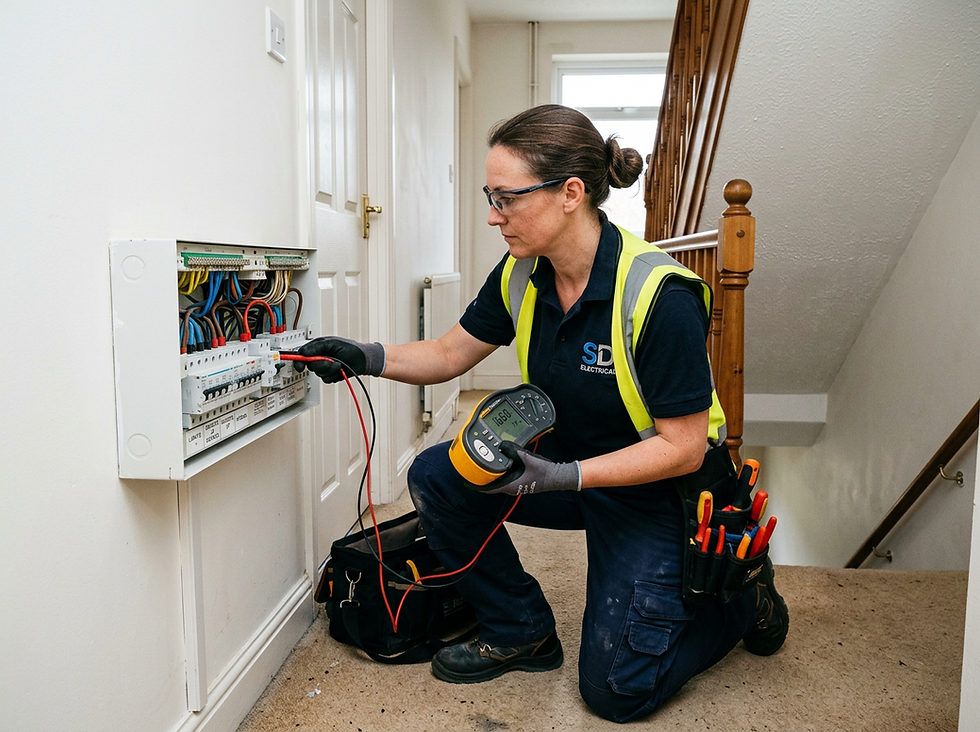
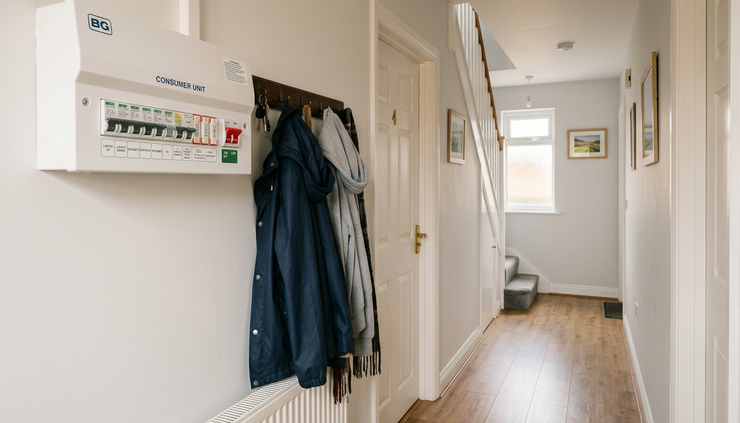
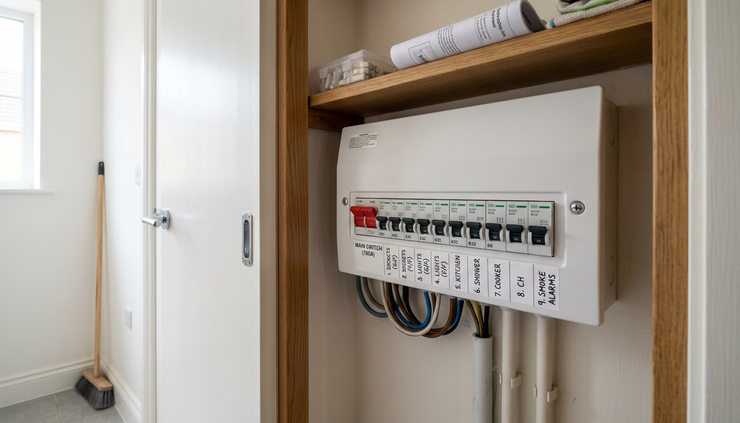
An EICR is a formal inspection and test of the fixed electrical system in a property. That usually includes the consumer unit, wiring, sockets, switches, light fittings, earthing, bonding, and protective devices.
It does not simply mean someone looks around and says the lights work. A competent electrician uses test equipment and visual checks to assess whether the installation is safe for continued use.
The report looks for issues such as:
Damaged or exposed wiring
Poor earthing or bonding
Overloaded circuits
Outdated consumer units
Faulty sockets or switches
Signs of overheating
Electrical work that has been done badly
Missing or unsuitable protective devices
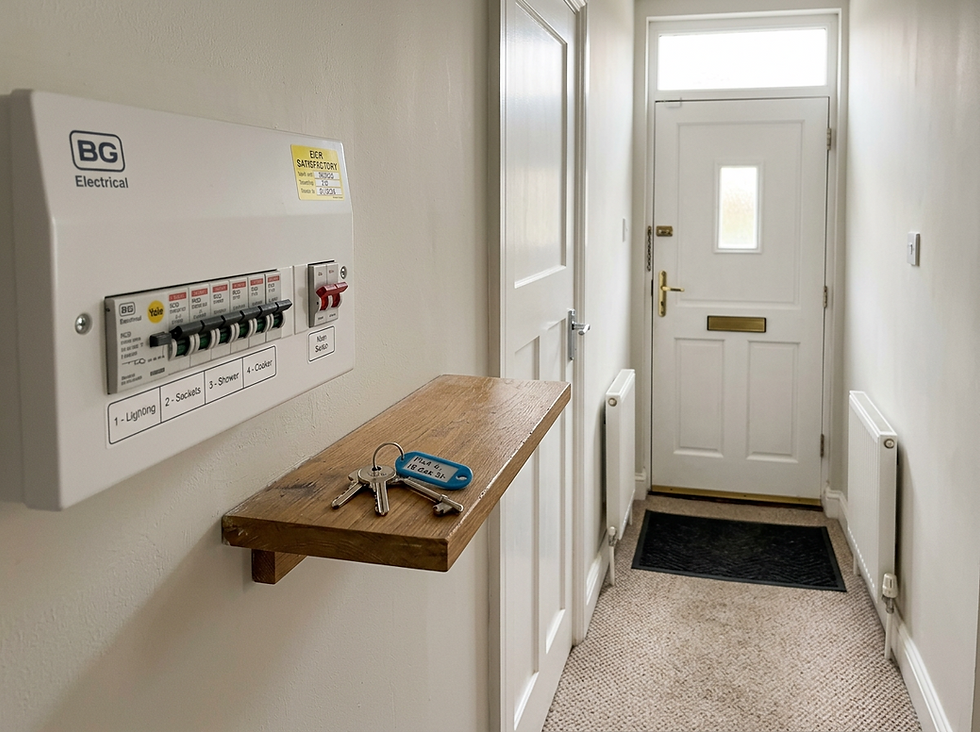
At the end of the inspection, the electrician gives the installation a result. If the report is satisfactory, it means no urgent or potentially dangerous defects were found at the time of inspection.
If the report is unsatisfactory, it will list observations using inspection codes. The most common are:
Code | What it means | What landlords should do |
C1 | Danger present | Make safe immediately |
C2 | Potentially dangerous | Arrange remedial work urgently |
FI | Further investigation needed | Get the issue checked and resolved |
C3 | Improvement recommended | Not usually a fail, but worth reviewing |
A satisfactory EICR does not mean the property will never have an electrical issue. It means the fixed electrical installation met the required safety standard at the time it was tested.
Landlords need an EICR because electrical safety is a legal duty
In England, most private landlords must have the electrical installations in rented homes inspected and tested at least every five years. The landlord must use a qualified and competent person and provide the report where required.
The broad duty is simple: the electrical installation must be safe before a tenancy starts and kept safe during the tenancy.
England has specific rules under the Electrical Safety Standards in the Private Rented Sector regulations. Scotland and Wales also have electrical safety requirements for rented homes, with their own housing rules and enforcement routes. Northern Ireland has landlord safety obligations too, although the framework is not identical.
That means a landlord with properties in more than one part of the UK should not assume one process covers every location in the same way.
In practical terms, an EICR helps landlords meet duties around:
Tenant safety
Property condition
Legal compliance
Record keeping
Responding to defects
Showing proof if challenged
For many landlords, the most useful part of the EICR is that it creates a clear paper trail. If a tenant, letting agent, council, insurer, or buyer asks about electrical safety, the landlord has evidence from a competent person rather than relying on memory or assumptions.
An EICR protects tenants from serious electrical risks
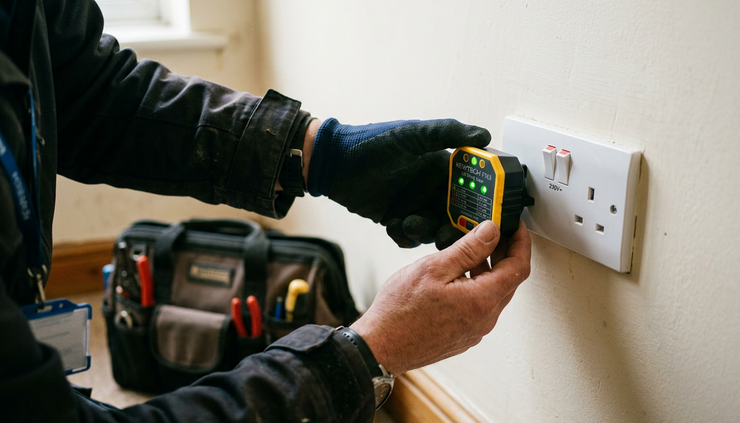
Electrical faults can cause shocks, burns, fires, and power failures. In rented homes, the risk can be higher when a property has had several tenants over the years, repeated minor alterations, old wiring, or heavy use of appliances.
Tenants cannot usually inspect wiring behind walls or inside a consumer unit. They rely on the landlord to make sure the home is safe.
An EICR can identify problems that tenants may never spot, such as:
A circuit that lacks proper protection
A consumer unit that no longer offers suitable safeguards
A loose connection that could overheat
A DIY alteration from a previous occupier
Old wiring that is no longer suitable for current use
This matters because tenants often use the electrical system differently from previous occupants. One household may run several computers, heaters, kitchen appliances, chargers, and entertainment devices at the same time. An older installation may not cope well if it has not been checked for years.
A good inspection gives a clearer picture of whether the system is safe for how people live now, not just how the property was wired decades ago.
It also gives tenants confidence. When a landlord can provide a current report, it shows that safety is being taken seriously. That can help avoid disputes, especially when tenants raise concerns about flickering lights, tripping circuits, burning smells, or damaged accessories.
An EICR helps landlords avoid penalties and enforcement action
Local councils can take action where landlords do not meet electrical safety rules. In England, failure to comply with the private rented sector electrical safety regulations can lead to enforcement notices and financial penalties.
The exact enforcement process depends on the circumstances and location, but the risk is clear. If a landlord cannot produce a valid report when required, or fails to complete necessary remedial works, the issue can quickly become more serious.
An EICR also matters if something goes wrong. After an electrical incident, landlords may be asked to show what checks were done, when they were done, who carried them out, and whether recommended works were completed.
Without records, it becomes harder to show that reasonable steps were taken.
A landlord should normally keep:
The current EICR
Previous EICRs, where available
Invoices for remedial work
Electrical certificates for new work
Written confirmation that defects were fixed
Copies shared with tenants or agents
Any correspondence with the local authority
In England, if remedial work is required, landlords must usually arrange it within the timescale set out in the report, or within the legal deadline if sooner. Where a report identifies immediate danger, the issue should be made safe straight away.
The safest approach is to deal with any C1, C2, or FI observations promptly and keep proof that the work was completed.

A valid report can support insurance, mortgages, and property management
An EICR is mainly about safety and legal compliance, but it can also support the wider management of a rental property.
Some insurers may ask whether the electrical installation has been inspected. If there is a fire or electrical damage, records can help show that the landlord took reasonable care. Policy wording varies, so landlords should check their own insurance documents rather than guessing.
Mortgage lenders, letting agents, and property managers may also ask for proof that safety checks are up to date. For portfolio landlords, current reports make management simpler because each property has a clear inspection date, outcome, and next review date.
An EICR can also help with maintenance planning. For example, the report may show that a consumer unit is safe but dated, or that certain improvements are recommended. That gives the landlord time to budget instead of waiting for a failure during a tenancy.
Common follow-up work may include:
Replacing damaged sockets or switches
Improving earthing or bonding
Upgrading protective devices
Investigating overloaded circuits
Repairing unsafe alterations
Replacing an old consumer unit, where needed
Not every recommendation means the whole property needs rewiring. A qualified electrician should explain what is urgent, what is recommended, and what can be planned for later.
How often landlords need an EICR
For most private rented homes in England, an EICR is required at least every five years. A report may recommend a shorter interval if the installation is older, has defects, or is subject to heavier use.
A new EICR may also be sensible when:
Buying a rental property
Letting a property for the first time
Taking over management from another landlord
Completing major electrical work
Concerns are raised by tenants
The property has had flooding, fire damage, or significant deterioration
Landlords should not rely on a previous owner’s vague assurance that “the electrics are fine”. If the report is missing, out of date, or carried out by someone whose competence is unclear, arrange a fresh inspection.
The five-year period is a maximum in many cases, not a target to stretch at all costs. If the property gives signs of electrical trouble, get it checked.
Warning signs include:
Frequent tripping
Buzzing from switches or the consumer unit
Scorch marks around sockets
A burning smell
Flickering lights
Cracked fittings
Warm plugs or sockets
Tenants receiving mild shocks from appliances or fittings
Any sign of danger needs urgent attention.
Who can carry out an EICR
An EICR should be carried out by someone who is competent to inspect and test electrical installations. In practice, landlords usually choose a qualified electrician with inspection and testing experience.
Before booking, ask:
Are they qualified to carry out inspection and testing?
Do they have experience with domestic rental properties?
Will they provide a written EICR?
Are they insured?
Can they explain any observations clearly?
Will they identify which issues affect the satisfactory or unsatisfactory outcome?
Landlords do not need to become electrical experts, but they should choose someone who can explain the report in plain English.
A low-cost inspection may be tempting, especially for landlords with several properties, but a poor report can create bigger problems later. The aim is not just to tick a box. The aim is to know whether the installation is safe.
What happens if the EICR is unsatisfactory
An unsatisfactory report is not rare, especially in older properties. It does not always mean the property is unlettable forever, but it does mean action is needed.
The next steps are usually:
Read the observations carefully.
Ask the electrician to explain any unclear items.
Arrange remedial work for C1, C2, and FI issues.
Get written confirmation once work is complete.
Provide updated paperwork to the tenant or agent where required.
Keep all documents with the property records.
C1 issues are the most serious and should be made safe immediately. C2 items are potentially dangerous and should not be ignored. FI means the electrician could not confirm safety without further investigation, so it still needs action.
C3 recommendations do not usually make a report unsatisfactory by themselves. They point to improvements that could make the installation safer or closer to current standards.
A common mistake is to treat the EICR as finished once the inspection has taken place. If the report is unsatisfactory, the process is not complete until the required remedial work or investigation has been dealt with and recorded.
What landlords should do now
A landlord who is unsure about the status of a property should start with the paperwork.
Check whether there is a current EICR, when it was carried out, who completed it, whether it was satisfactory, and when the next inspection is due. If the report listed remedial work, check that there is proof the work was completed.
If there is no valid report, book an inspection with a competent electrician. If a letting agent manages the property, ask them to confirm what they hold on file and whether the tenant has received the documents required in that part of the UK.
A simple system helps avoid missed dates. Keep a record for each property with:
Inspection date
Report outcome
Next inspection due date
Electrician details
Remedial work status
Certificates and invoices
Copies sent to tenants or agents
The main reason to get an EICR is safety. The second reason is proof. Landlords need both.
A current EICR shows that the hidden parts of the electrical system have been checked by a competent person. It helps protect tenants, reduces the risk of enforcement action, supports insurance and property records, and gives landlords a clearer maintenance plan.
For a rented property, “the electrics seem fine” is not enough. A proper inspection gives evidence, direction, and peace of mind.